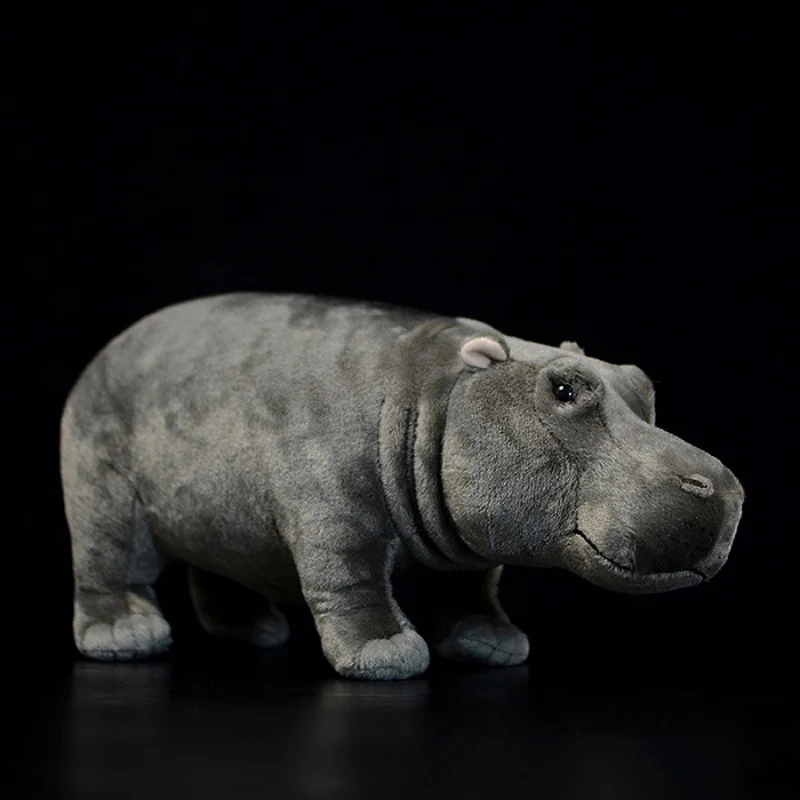
Realistic Hippo Plush Toy – Soft, Huggable, and Perfect for Kids and Collectors
Animal Facts:
The hippopotamus (Hippopotamus amphibius), or hippo, is a large, semi-aquatic mammal native to sub-Saharan Africa. Known as the "river horse" in Greek, hippos are the third-largest land mammals, after elephants and rhinos. They have barrel-shaped bodies, large mouths with tusk-like canines, and nearly hairless skin.
Hippos spend their days in rivers or lakes to stay cool and emerge at night to graze on grasses. Despite their herbivorous diet, they are among the most dangerous animals due to their territorial and unpredictable nature. Hippos face threats from habitat loss and poaching and are listed as vulnerable on the IUCN Red List.
Animal Facts:
The hippopotamus (Hippopotamus amphibius), or hippo, is a large, semi-aquatic mammal native to sub-Saharan Africa. Known as the "river horse" in Greek, hippos are the third-largest land mammals, after elephants and rhinos. They have barrel-shaped bodies, large mouths with tusk-like canines, and nearly hairless skin.
Hippos spend their days in rivers or lakes to stay cool and emerge at night to graze on grasses. Despite their herbivorous diet, they are among the most dangerous animals due to their territorial and unpredictable nature. Hippos face threats from habitat loss and poaching and are listed as vulnerable on the IUCN Red List.
Original: $40.56
-70%$40.56
$12.17Description
Animal Facts:
The hippopotamus (Hippopotamus amphibius), or hippo, is a large, semi-aquatic mammal native to sub-Saharan Africa. Known as the "river horse" in Greek, hippos are the third-largest land mammals, after elephants and rhinos. They have barrel-shaped bodies, large mouths with tusk-like canines, and nearly hairless skin.
Hippos spend their days in rivers or lakes to stay cool and emerge at night to graze on grasses. Despite their herbivorous diet, they are among the most dangerous animals due to their territorial and unpredictable nature. Hippos face threats from habitat loss and poaching and are listed as vulnerable on the IUCN Red List.